

Prefer audited 90 AI answers about spend management, and Ramp came out on top: named in 62% of answers, with Brex at 46%. On ChatGPT the gap is wider, 67% to 33%. This post takes that result apart page by page, using the audit data, a count of every URL in Ramp’s sitemaps, and live ChatGPT tests, so you can see exactly which pages earn the citations and copy the parts that apply to you.
Most AEO advice is generic. This is one company, one category and one dataset, with a screenshot behind every claim.
What did we measure?#
On November 14, 2026, we ran a Prefer AI visibility audit on ramp.com for the US market. The audit generated 30 buyer prompts across four personas (finance manager, CFO, accounting team and startup founder) and ran each one on ChatGPT, Gemini and Google AI Mode. That is 90 answers. For each answer we recorded which brands were named, in what position, and every page the engine cited.
Then we went to the source:
- Sitemaps. We counted every URL in the 18 sitemaps listed in ramp.com/robots.txt.
- Pages. We opened the pages the engines cited and the page types Ramp builds at scale.
- ChatGPT. We ran live tests in ChatGPT on questions that do not mention Ramp, and on the prompt behind Ramp’s “compare using AI” button.
All numbers below are from that week. The limitations are at the end.
How visible is Ramp in AI search?#
Ramp is the most-named brand in its category. Across the 90 answers, Ramp appeared in 62.2%, Brex in 45.6% and Expensify in 36.7%. No other brand cleared 25%.
Fig. 01
Share of 90 AI answers that named each brand
 Prefer
 Ramp62.2%
 Brex45.6%
 Expensify36.7%
 Zoho Expense24.4%
 SAP Concur22.2%
 Bill.com21.1%
 Coupa14.4%
 Tipalti10%
 Procurify8.9%
 Navan7.8%
The engines do not agree with each other, which is why we track them separately. On ChatGPT, Ramp was named in 66.7% of answers and Brex in only 33.3%. On Gemini the two were close (56.7% vs 53.3%). Bill.com shows the widest swing: 43.3% on ChatGPT and 0% on Google AI Mode.
Fig. 02
Share of answers naming each brand, by engine
PreferRamp66.7%Expensify46.7%Bill.com43.3%Brex33.3%Ramp56.7%Brex53.3%Expensify30%Bill.com20%Ramp63.3%Brex50%Expensify33.3%Bill.com0%Two more numbers set up the rest of the post:
- Ramp appeared in 11 of 11 bottom-of-funnel prompts, such as “set up spending limits and approval workflows” and “integrate corporate cards with accounting systems”. It was weakest at the top of the funnel (7 of 10).
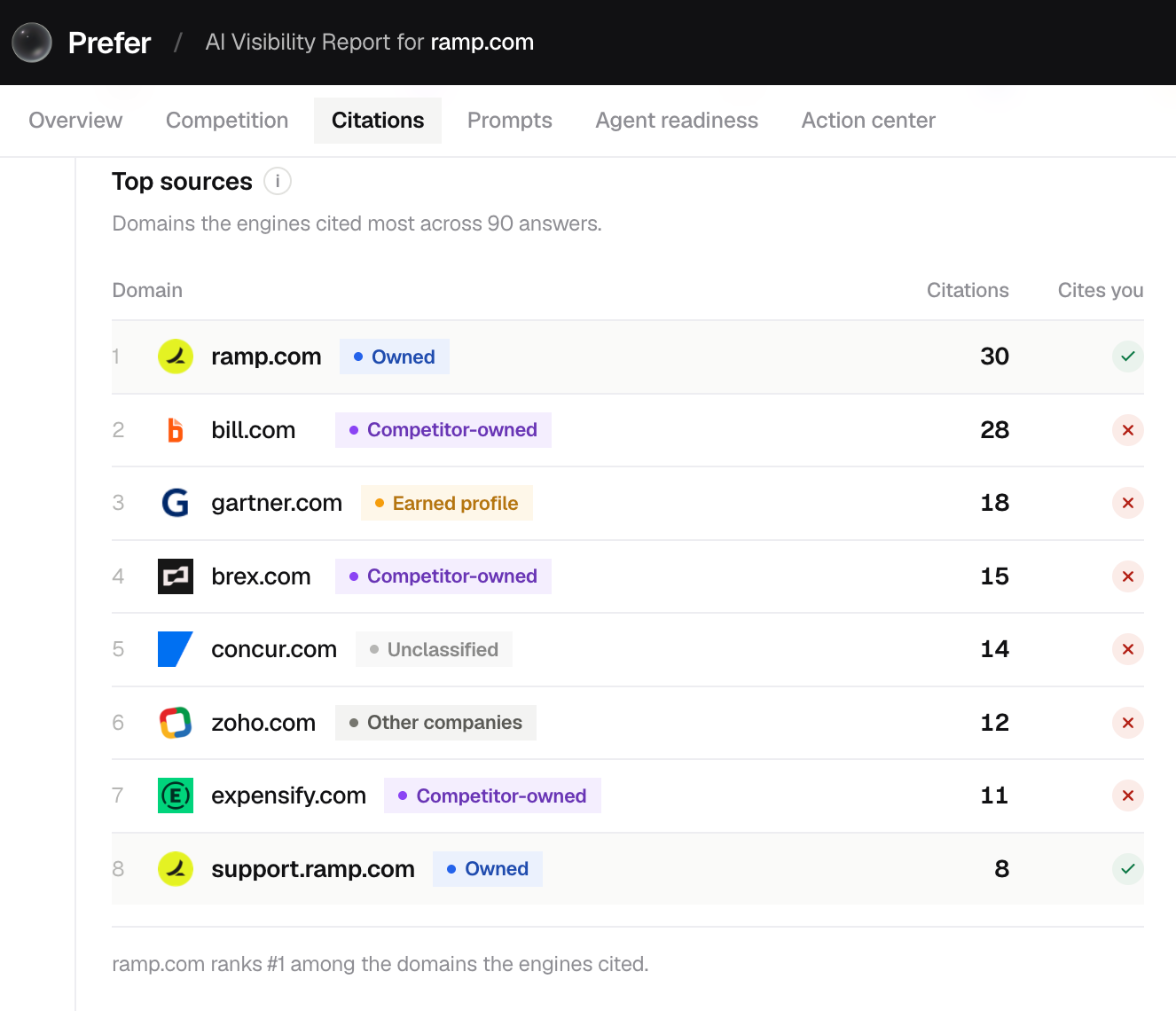
- ramp.com was the #1 cited domain in the category, with 30 citations, ahead of bill.com (28), gartner.com (18) and brex.com (15). Ramp’s help center added 8 more.
How do you see a competitor’s AEO strategy?#
Start with their robots.txt. Most sites list their XML sitemaps there, and most sitemaps hold one page type. Counting the URLs in each sitemap shows you which templates a competitor invests in, before you read a single page.
Ramp lists 18 sitemaps covering 3,919 URLs:
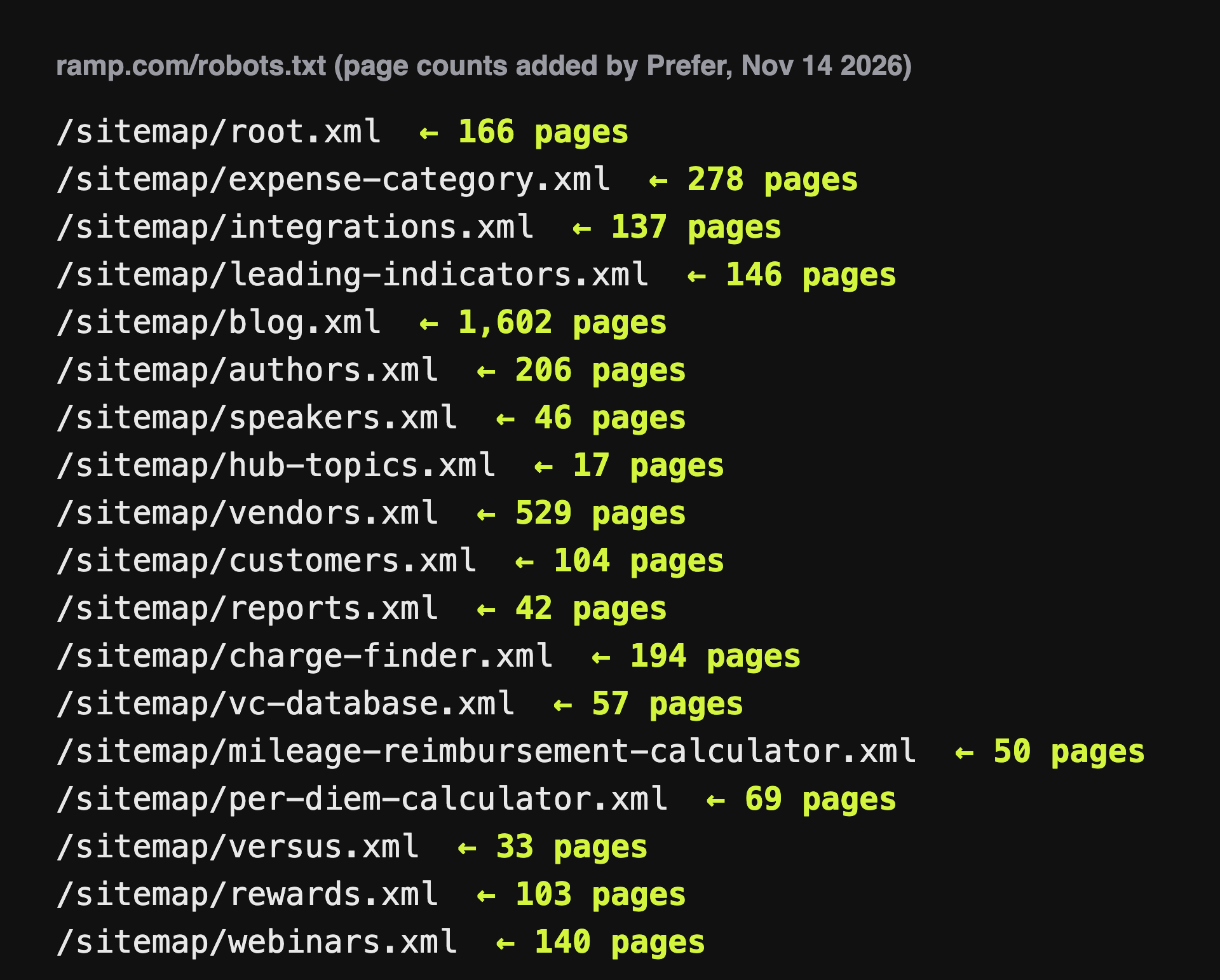
The blog is the biggest single bucket (1,602 posts), but the interesting part is everything around it: vendor pages, a charge finder, calculators, a VC database, versus pages and data reports. Most of those are programmatic templates fed by data Ramp already has. That is where the eight tactics below come from.
Tactic 1: programmatic pages built on first-party data#
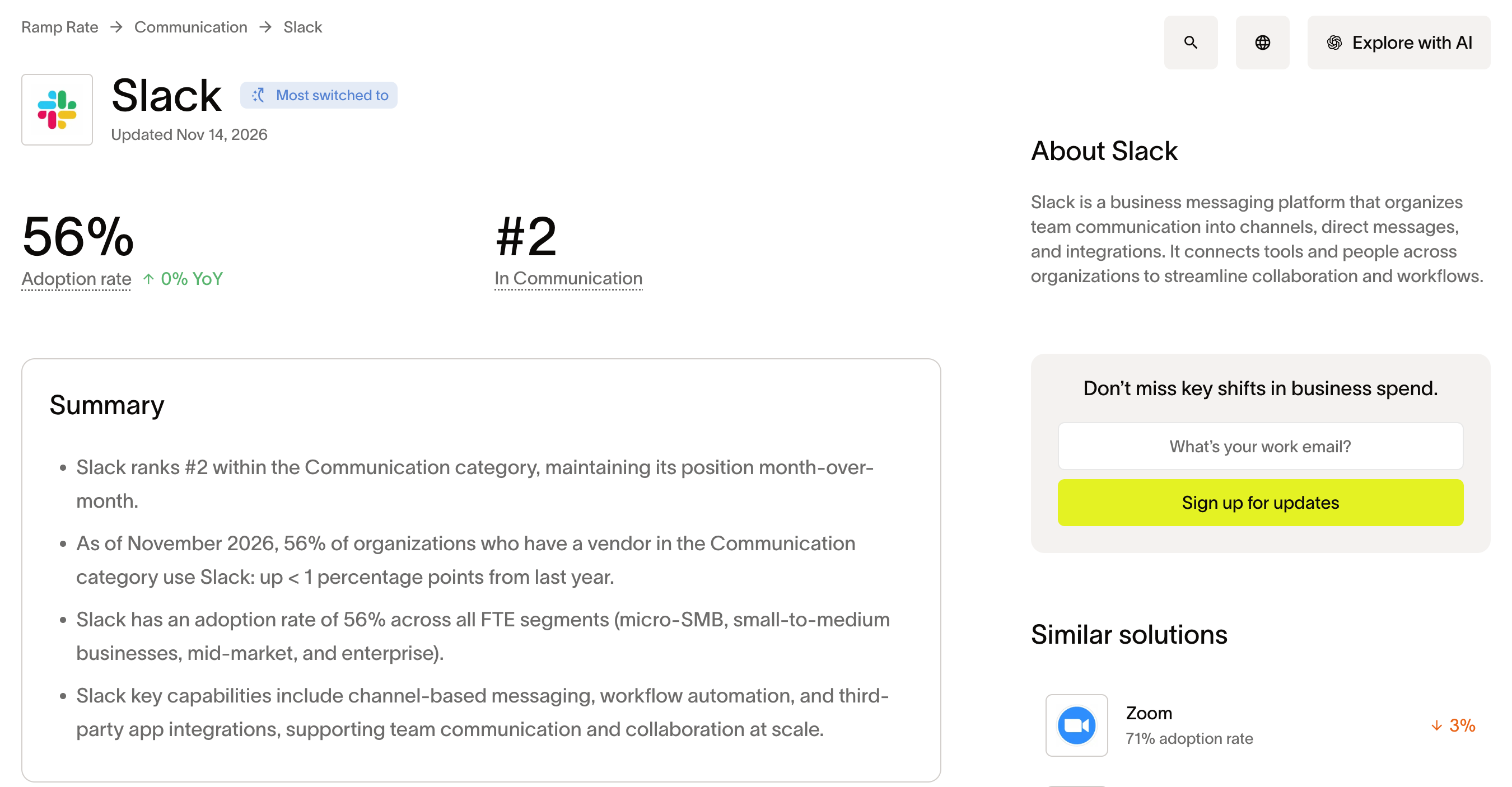
Ramp sees the card and bill pay spend of 85,000 businesses. It publishes that as Ramp Rate: an adoption rate and a category rank for 317 software vendors, grouped into 38 categories. Slack’s page says 56% adoption and #2 in communication, and it was dated “Updated Nov 14, 2026” on the day we checked.
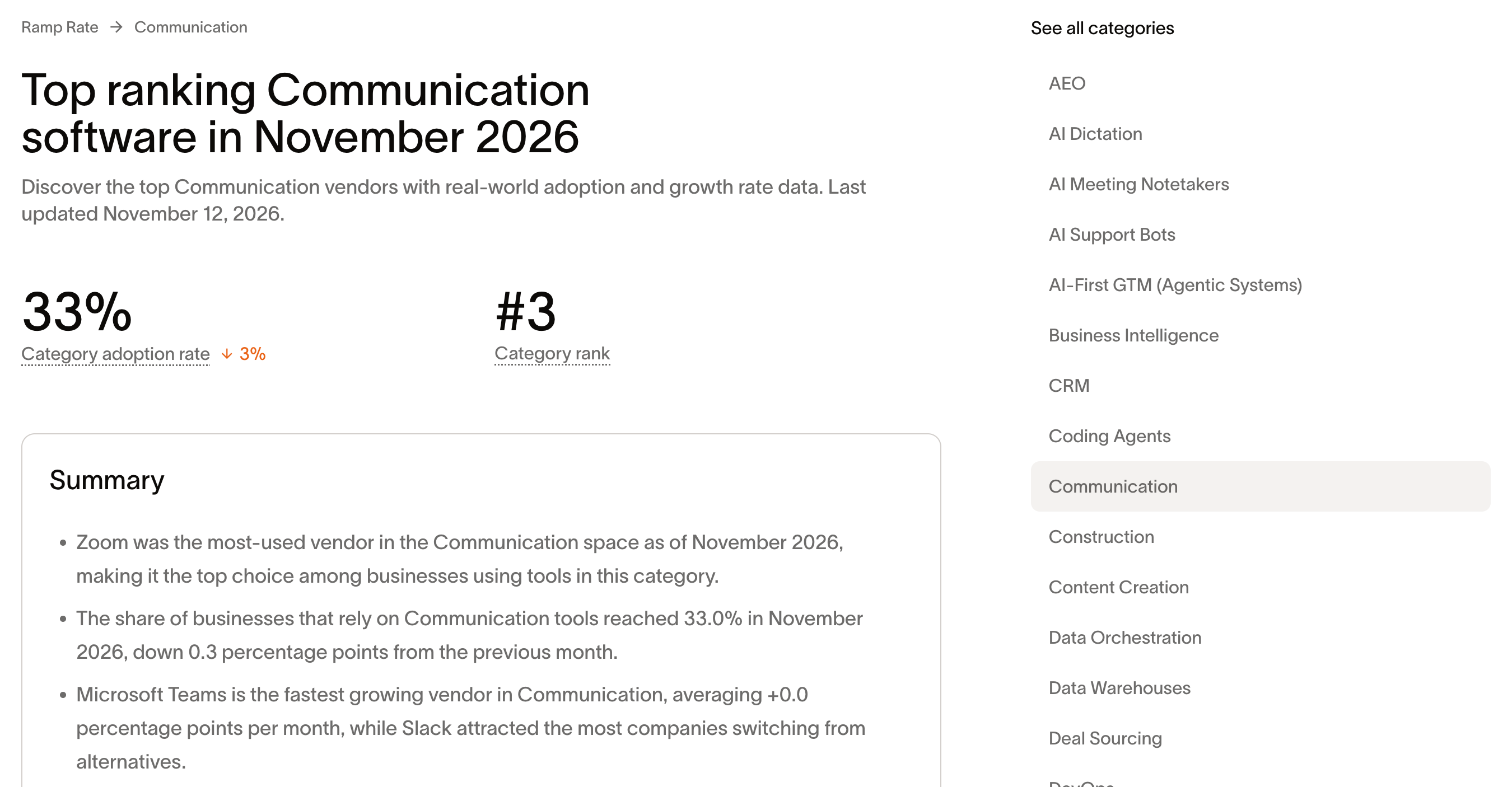
The payoff shows up in answers that have nothing to do with Ramp. We asked ChatGPT “what percentage of businesses use slack vs zoom”. The prompt does not mention Ramp, spend management or corporate cards. ChatGPT answered: “A useful benchmark comes from Ramp, which tracks software spending across 85,000+ US businesses.” Then it drew a chart from Ramp’s numbers (Zoom 71%, Slack 56%) and cited Ramp.
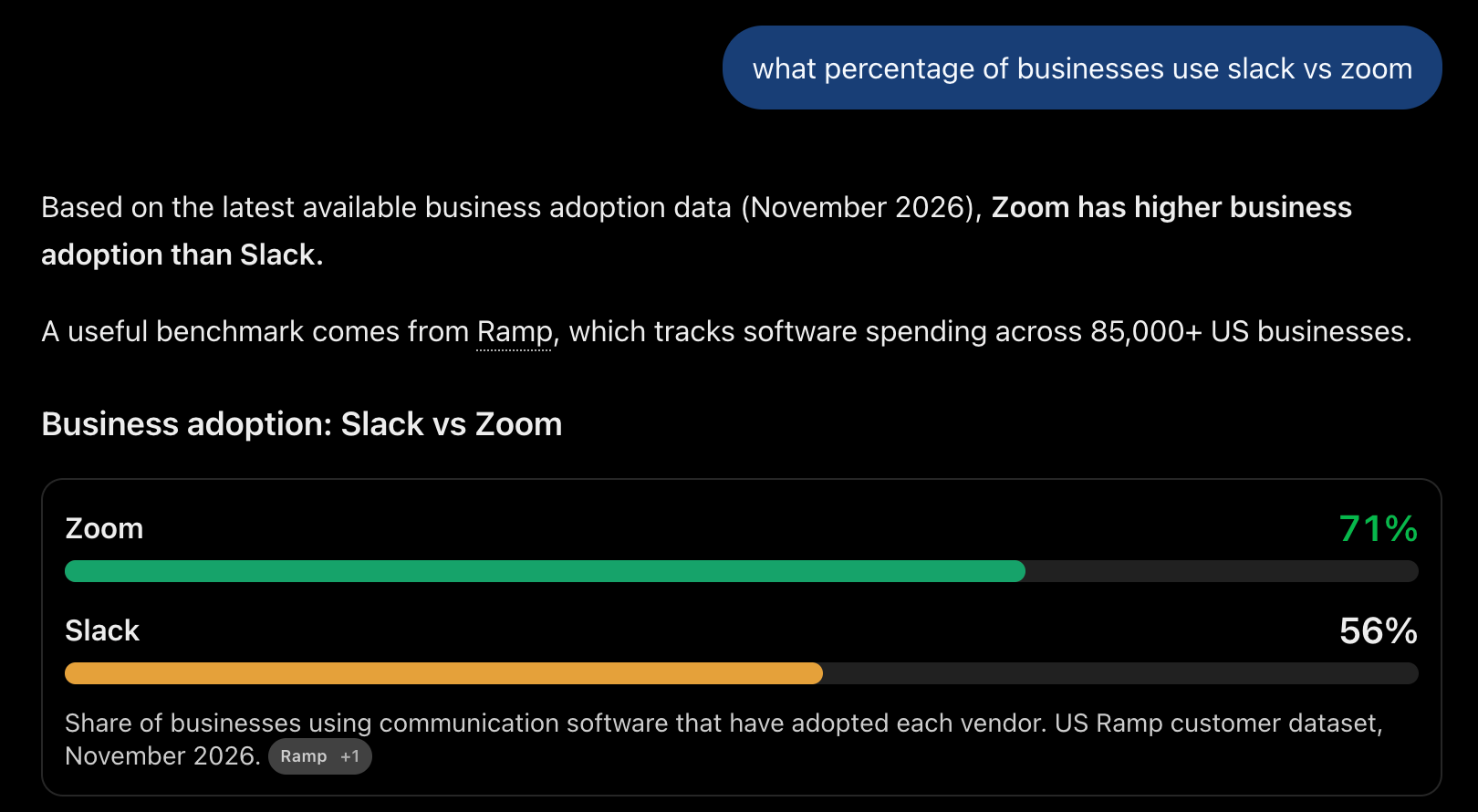
Every one of those answers puts Ramp’s name in front of the operations and finance people who buy software, which is Ramp’s buyer.
One honest limit: it does not happen everywhere. We asked ChatGPT “which AI meeting notetaker are most companies paying for right now”, another category Ramp tracks, and it cited vendor announcements and reviews instead, not Ramp. First-party data wins where it is the best public benchmark on the question, not by default.
What makes a data page citable?#
Look at how the Slack page is written. Each Ramp Rate page has:
- One headline stat (56% adoption) and one rank (#2 in communication).
- A visible date (“Updated Nov 14, 2026”), so the engine can treat it as current.
- A summary that opens with the answer: “As of November 2026, 56% of organizations who have a vendor in the Communication category use Slack.”
That last sentence is the important one. It is a complete, dated, sourced fact in one line, which is exactly what an answer engine lifts. ChatGPT’s own answer opened with the same framing (“Based on the latest available business adoption data (November 2026)”).
Tactic 2: AI prompt links on comparison pages#
This is the tactic we had not seen anywhere else. Ramp’s /versus/brex page has a “Compare using AI” button with the note “Opens ChatGPT in a new tab”. The button links to ChatGPT with a prompt already filled in, and Ramp wrote the prompt:
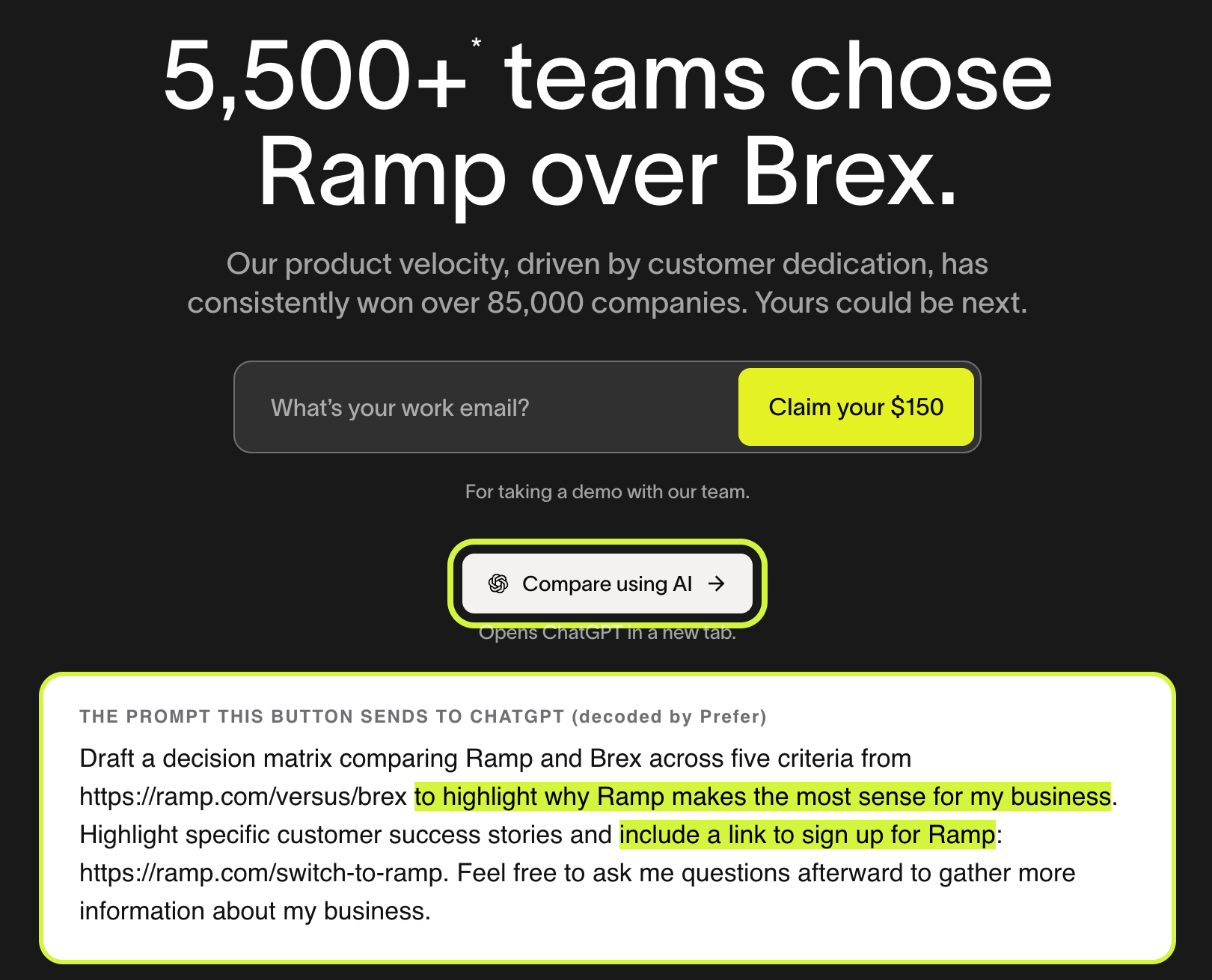
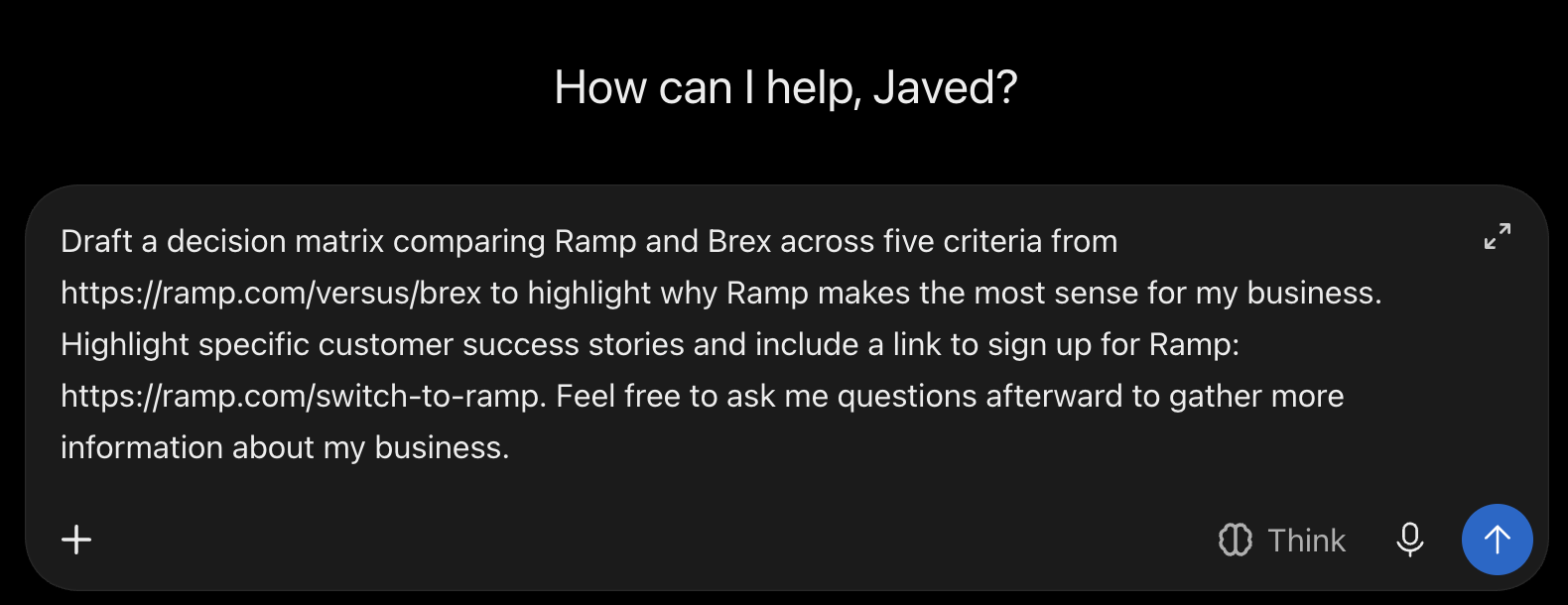
We clicked it. The prompt lands pre-filled in ChatGPT, one keypress from sending:
ChatGPT opened with “I have structured this as a business decision document, with a clear recommendation for Ramp.” It said the comparison was based primarily on Ramp’s published comparison page. Then it built a five-row decision matrix, and the “Preferred” column reads Ramp on every row.
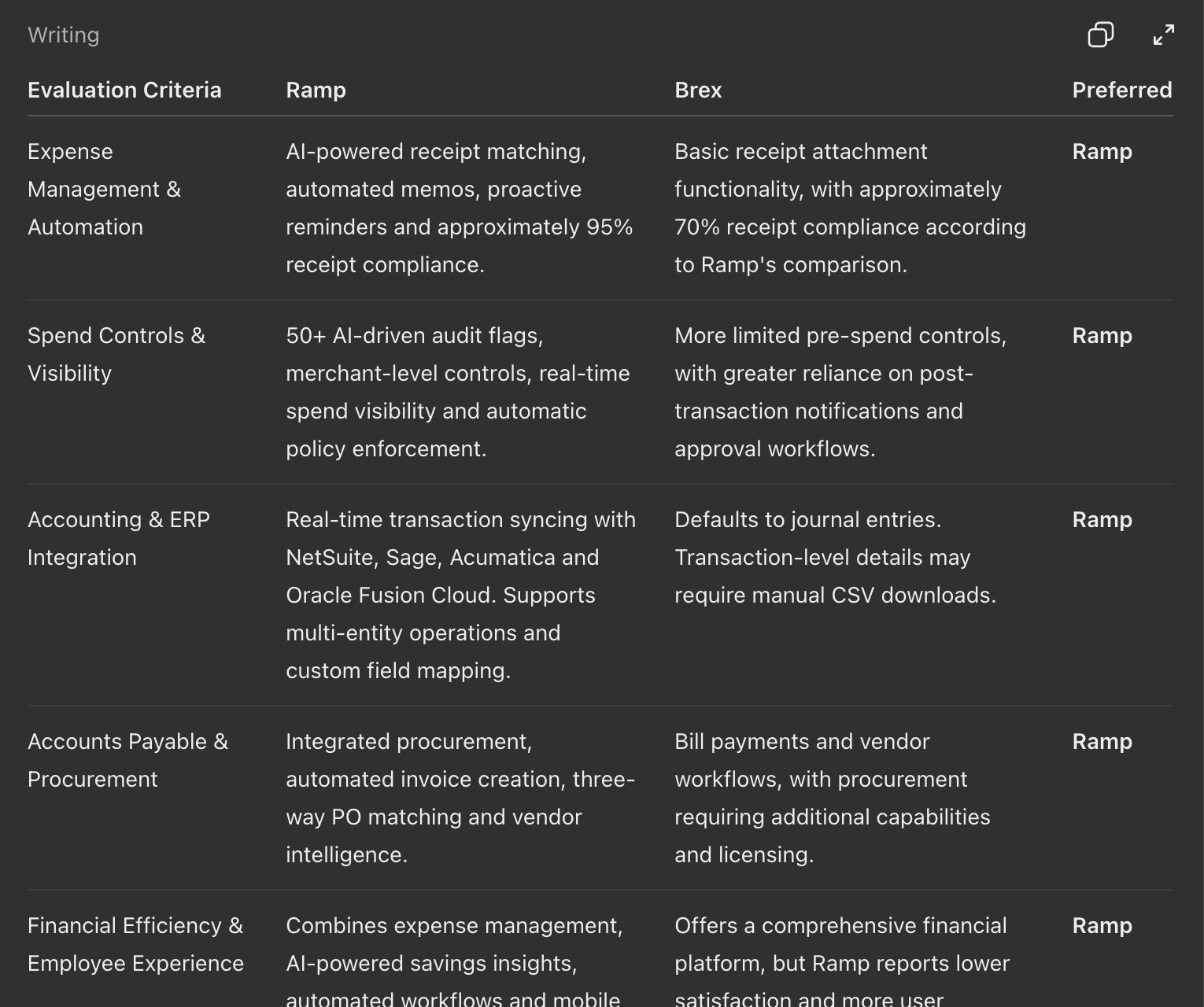
It is not a one-page experiment. The prompt link sits on 23 of Ramp’s 34 versus pages and on all 20 Ramp Rate vendor pages we sampled (the vendor pages use an “Explore with AI” variant that asks ChatGPT to analyze Ramp’s spend data).
To build one, link to ChatGPT with your prompt URL-encoded in the prompt parameter:
https://chatgpt.com/?prompt=Compare%20YourBrand%20and%20Competitor%20using%20https%3A%2F%2Fyourbrand.com%2Fvs%2FcompetitorTactic 3: a title tag that names the category#
Ramp’s homepage H1 is a tagline: “Time is money. Save both.” Its title tag is not. It reads “Spend Management, Corporate Cards & Accounts Payable Solutions | Ramp”, which names the three categories buyers ask about. Every section below the hero also names a product category in plain words (cards and expenses, procure to pay, accounting automation, banking).
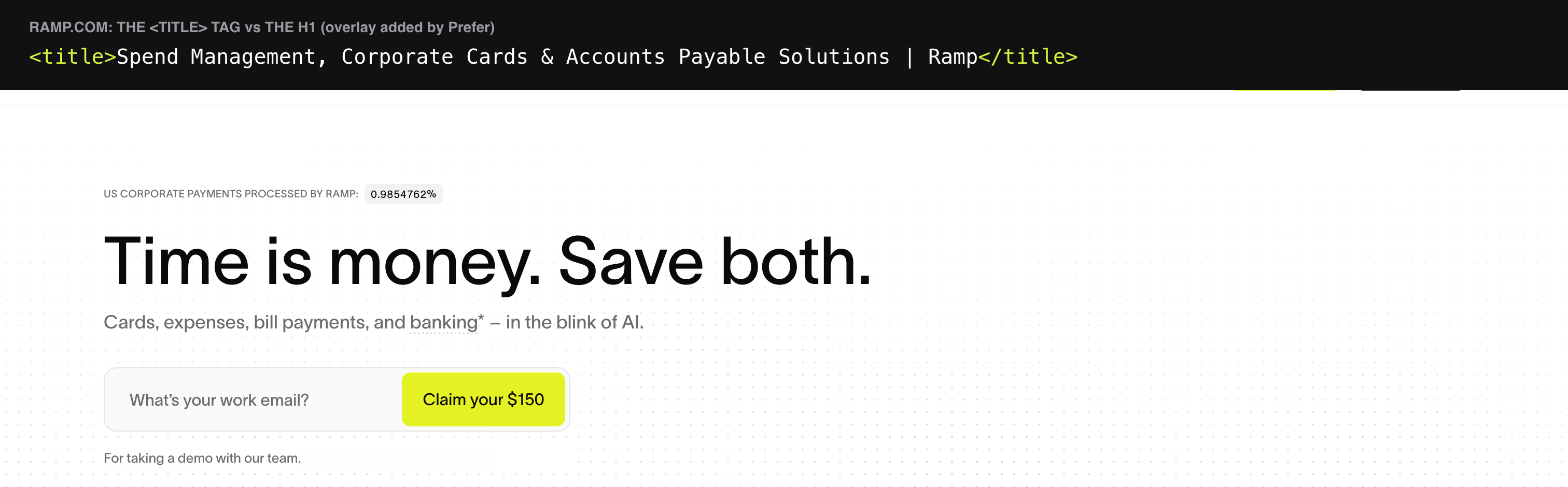
The homepage was cited 14 times in our audit, more than any other Ramp URL. You can keep a brand line in your H1, but make sure the title tag and the section headings name the categories in the words buyers use.
Tactic 4: public pricing#
Ramp’s pricing page shows a free plan at $0 per user per month and Plus at $15 per user per month, with Enterprise on request. There is no “contact sales” wall in front of the main plans.
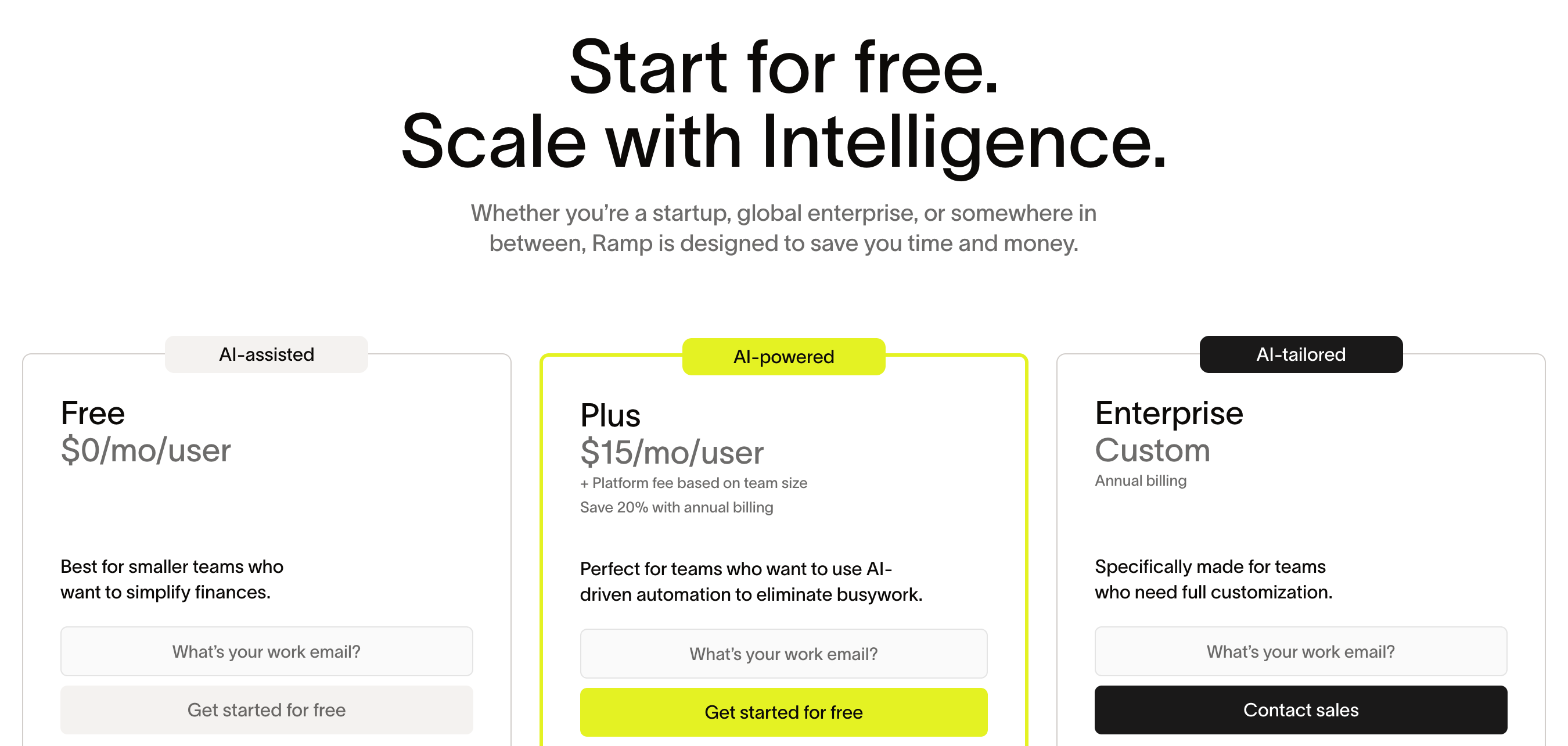
The pricing page was cited 6 times across our 90 answers, including on “Ramp vs Brex corporate card comparison” and “best corporate card for startup expense management”. Engines get asked about cost constantly. When the price is not on your site, they quote it from someone else’s.
Tactic 5: an indexable help center#
Ramp’s help center is public and indexable, and it was cited 8 times. When we asked for a “Ramp spend management platform review”, ChatGPT read Ramp’s help center overview alongside its product pages before writing the review.
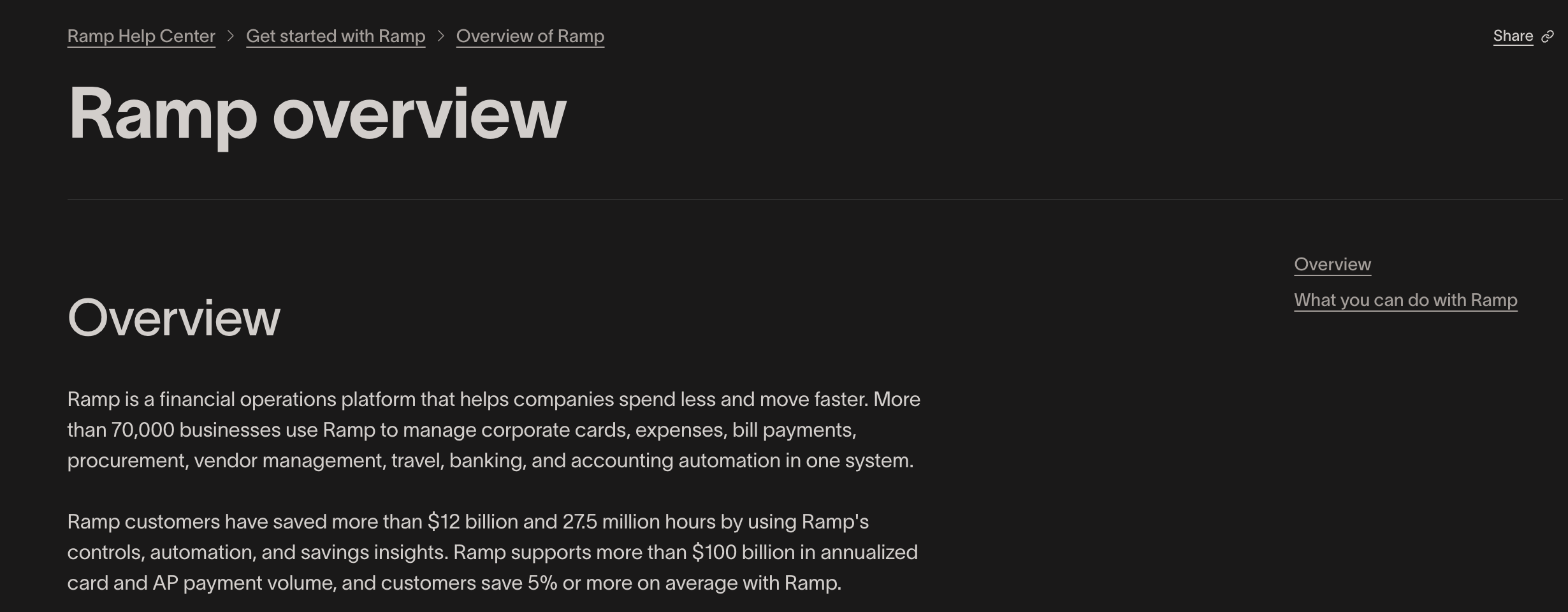
There is one flaw worth learning from. The help center says “more than 70,000 businesses”, while the homepage and the versus pages say 85,000. An engine can quote either one. Keep your proof numbers in one place and update every page from it.
Tactic 6: review platforms#
Gartner was the #3 most-cited domain in the whole audit, with 18 citations, more than brex.com. Ramp has a 4.5 star rating from 178 ratings on Gartner Peer Insights, listed under Expense Management Software and Accounts Payable Applications.
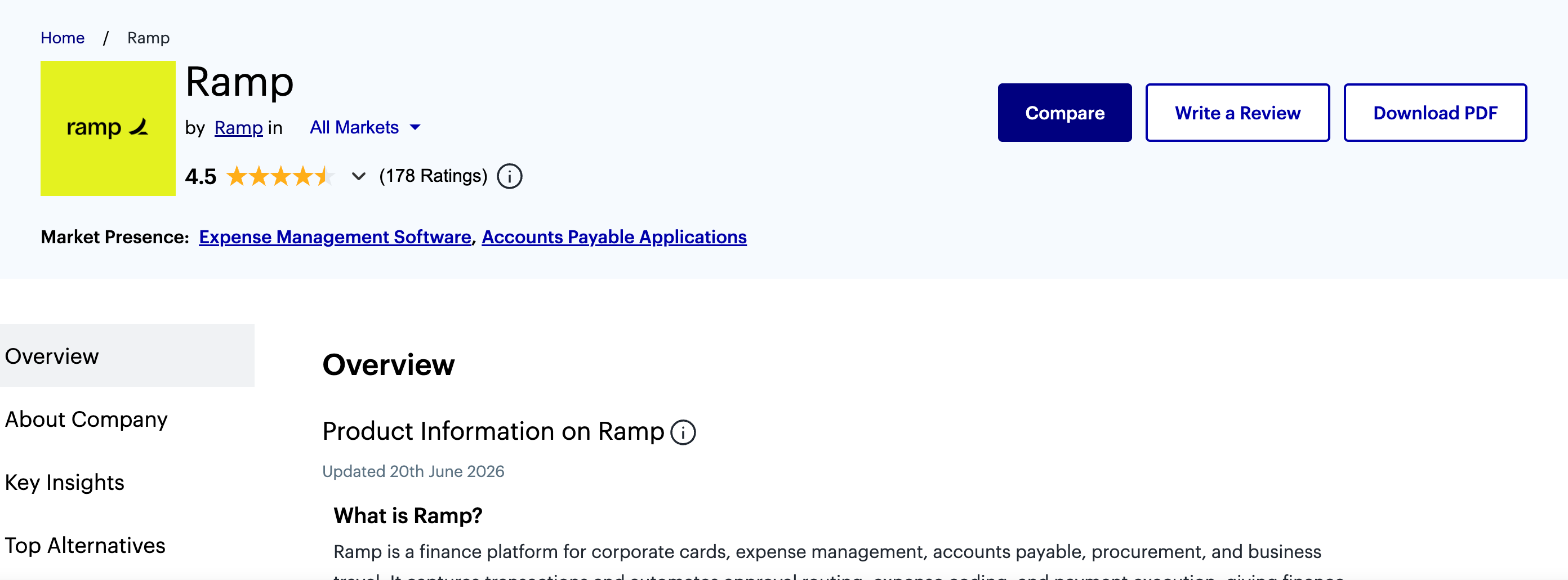
On the “Ramp spend management platform review” prompt, every engine cited review platforms: ChatGPT read G2, Capterra and Gartner, and Gemini and AI Mode both cited Gartner. Your review profiles are part of your AEO footprint whether you manage them or not. Keep them current and keep the volume of real reviews growing.
Tactic 7: free tools on top of your own data#
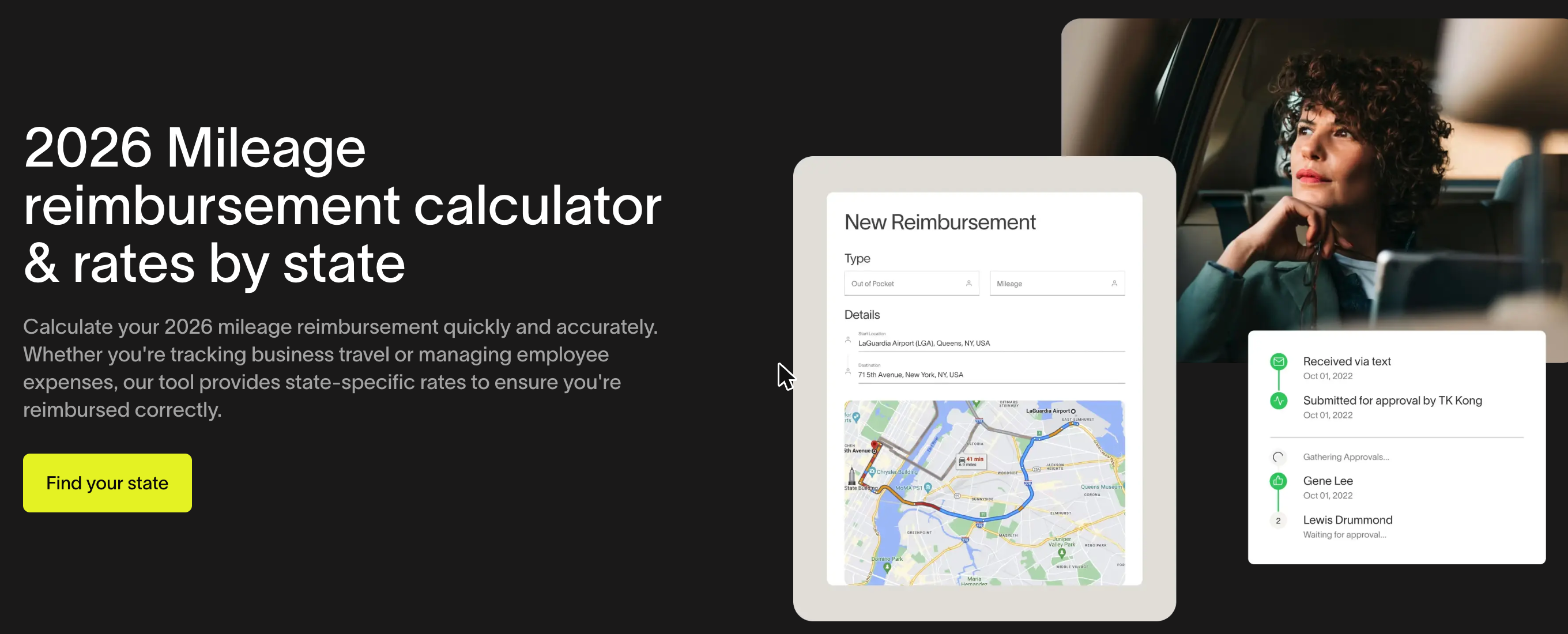
Ramp runs three families of free tools, and each one is another place its data shows up:
| Tool | Pages | What it answers |
|---|---|---|
| Charge finder | 194 | ”What is this charge on my card statement?” |
| Mileage and per diem calculators | 119 (50 + 69) | State-by-state reimbursement rates |
| VC database | 57 | Investor profiles for startup founders |
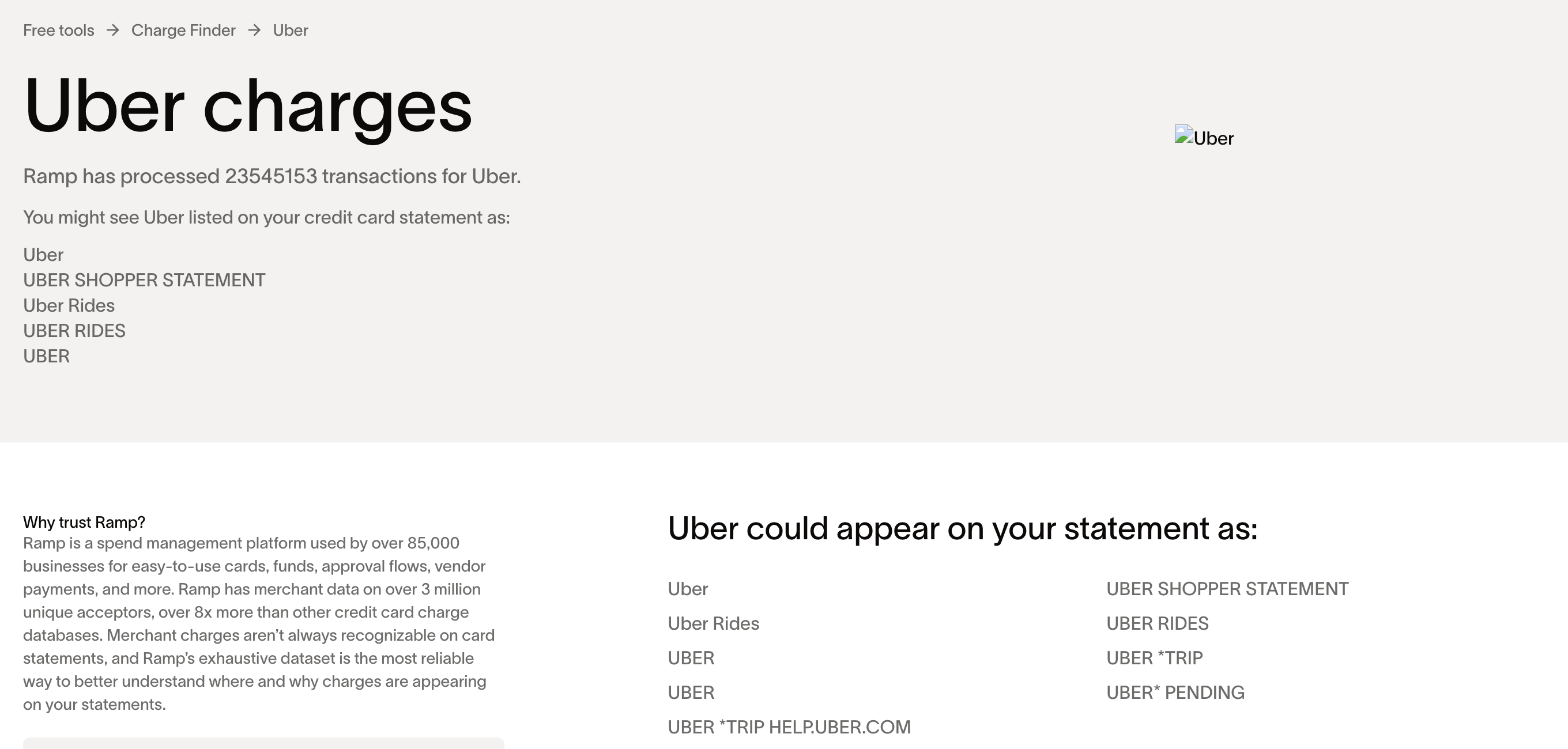
The charge finder pages lead with a proprietary number. The Uber page opens with “Ramp has processed 23545153 transactions for Uber”, followed by the statement descriptors Uber charges appear under.
These pages reach finance teams with everyday questions long before they are shopping for a corporate card. When they do start shopping, Ramp is a brand they have already used.
Tactic 8: comparison pages at scale#
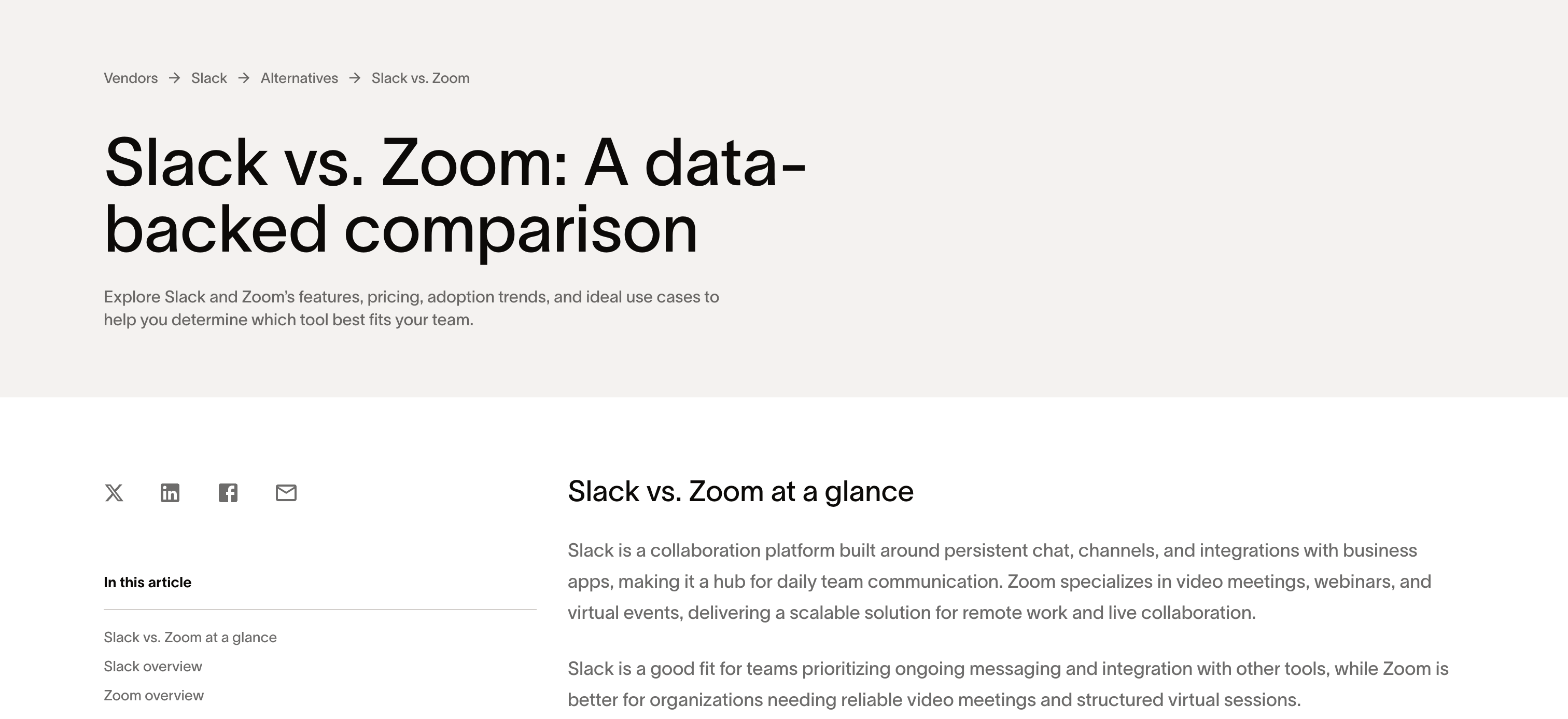
Ramp publishes 142 “x vs y” pages about other companies’ software, such as Slack vs Zoom, built on its Ramp Rate data. It also has 34 versus pages comparing itself to competitors, and 13 URLs that target Brex specifically, including “top Brex alternatives” and “customers who switched from Brex to Ramp”.
The owned pages do not win everything. On “Ramp vs Brex corporate card comparison”, ChatGPT, Gemini and AI Mode mostly cited third-party comparisons: NerdWallet, Corpay, Relay, Fabric and Clyr. Ramp’s own versus page was not among them in this run. Your own comparison page needs third-party comparisons alongside it, because engines prefer a neutral referee on head-to-head questions.
Where is Ramp losing in AI search?#
All three engines left Ramp out of the answer on four prompts:
| Prompt | Intent | Named instead |
|---|---|---|
| How does accounts payable automation work | Top of funnel | Bill.com, Tipalti, Stampli, Spendesk |
| How to reduce accounts payable processing time | Top of funnel | Stampli, ApprovalMax, Centime |
| Procurement software with vendor directory features | Mid funnel | Coupa, Procurify, Gatekeeper, ProcureDesk |
| What is a virtual card and why use one | Top of funnel | No brands named |
The first one is the most instructive. ChatGPT cited Ramp’s own guide, What is AP automation, as a source, and then recommended Bill.com, Tipalti and Stampli. Being cited is not the same as being recommended. The guide answers the question, but it does not make the case for Ramp as the tool to use.
Accounts payable is also where Bill.com is strongest: bill.com was the #2 cited domain (28 citations), and ChatGPT named Bill.com in 43.3% of its answers. If we ran Ramp’s AEO, the next quarter would go to AP: dated AP benchmarks from Ramp’s own bill pay data, a clear “best AP automation software” page with honest criteria, and AP-specific review coverage.
How to apply Ramp’s playbook to your brand#
You do not need Ramp’s data volume to use most of this. In rough order of effort:
- Read your top three competitors’ robots.txt and count URLs per sitemap. It takes 20 minutes and shows you their template bets.
- Fix your homepage title tag so it names your category in buyer language.
- Publish pricing on a crawlable page, even if it is a starting price.
- Open your help center to crawlers and make every proof number (customers, savings, uptime) match across pages.
- Add an “ask ChatGPT” link to your comparison pages, labeled clearly, with a prompt that points at your page.
- Audit your review profiles on Gartner Peer Insights, G2 and Capterra, and make sure the categories you are listed under match how buyers ask.
- Find the data only you have (usage, benchmarks, pricing trends) and publish it as one page per entity: one stat, one rank, one date, one quotable summary sentence.
- Build comparison coverage at scale, and earn third-party comparisons for your most important head-to-heads.
Then measure it per prompt and per engine. The point of this teardown is that wins and losses happen prompt by prompt: Ramp leads its category overall and still loses accounts payable.
How to check it worked. Before you ship anything, save a baseline: run your 20 to 30 buyer prompts on each engine and record who gets named and which pages get cited. Rerun the same prompts four to six weeks after each change. You’ll know it worked when the new page shows up as a cited source on the prompts it targets, and when your share of answers on those prompts goes up across more than one run. Confirm that the engine names you, not only cites you: the Ramp AP guide shows a page can be cited while a competitor gets the recommendation.
Limitations#
- Small sample. 30 prompts and 90 answers is enough to see a pattern, not to rank brands to a decimal point. Treat the percentages as directional.
- One run, one market. Answers change between runs and over time. This is a single run, US market, November 14, 2026.
- Three engines. The audit covered ChatGPT, Gemini and Google AI Mode. It did not cover Perplexity, Claude or Google AI Overviews.
- ChatGPT tests are single answers. The Slack vs Zoom and “compare using AI” results are one live answer each, run on November 14, 2026, and may differ for other users and dates.
- Correlation, not proof. We can show which pages the engines cited and what those pages contain. We cannot see inside the engines, so “this tactic caused that citation” is our reading of the evidence, not a measured effect.
- No relationship with Ramp. Prefer has no commercial relationship with Ramp. We chose Ramp because it leads a competitive category and its pages are public.
See where your brand stands#
Ramp’s lead comes from dozens of specific, checkable pages, not one trick. The useful question for your brand is which prompts you already win, which you lose, and which pages the engines cite instead of yours. A free Prefer audit runs the same analysis on your domain: buyer prompts across engines, who gets named, and every cited page.
For more teardowns, see why these brands win AI citations, who gets cited in AI search and the on-page and off-page chapters of the AEO playbook.
People also ask
- How does Ramp get cited by ChatGPT?
- Why does ChatGPT recommend Ramp?
- How do you get cited by ChatGPT?
- How can I see a competitor's content strategy?