Glossary
Answer Engine one answer instead of ten links.
An answer engine is a system like ChatGPT, Perplexity, or Google AI Overviews that returns a direct, synthesized answer instead of a ranked list of links.

Answer Engine An answer engine is a search system, such as ChatGPT, Perplexity or Google AI Overviews, that returns one sourced answer instead of a list of links. Prefer tracks five of them.
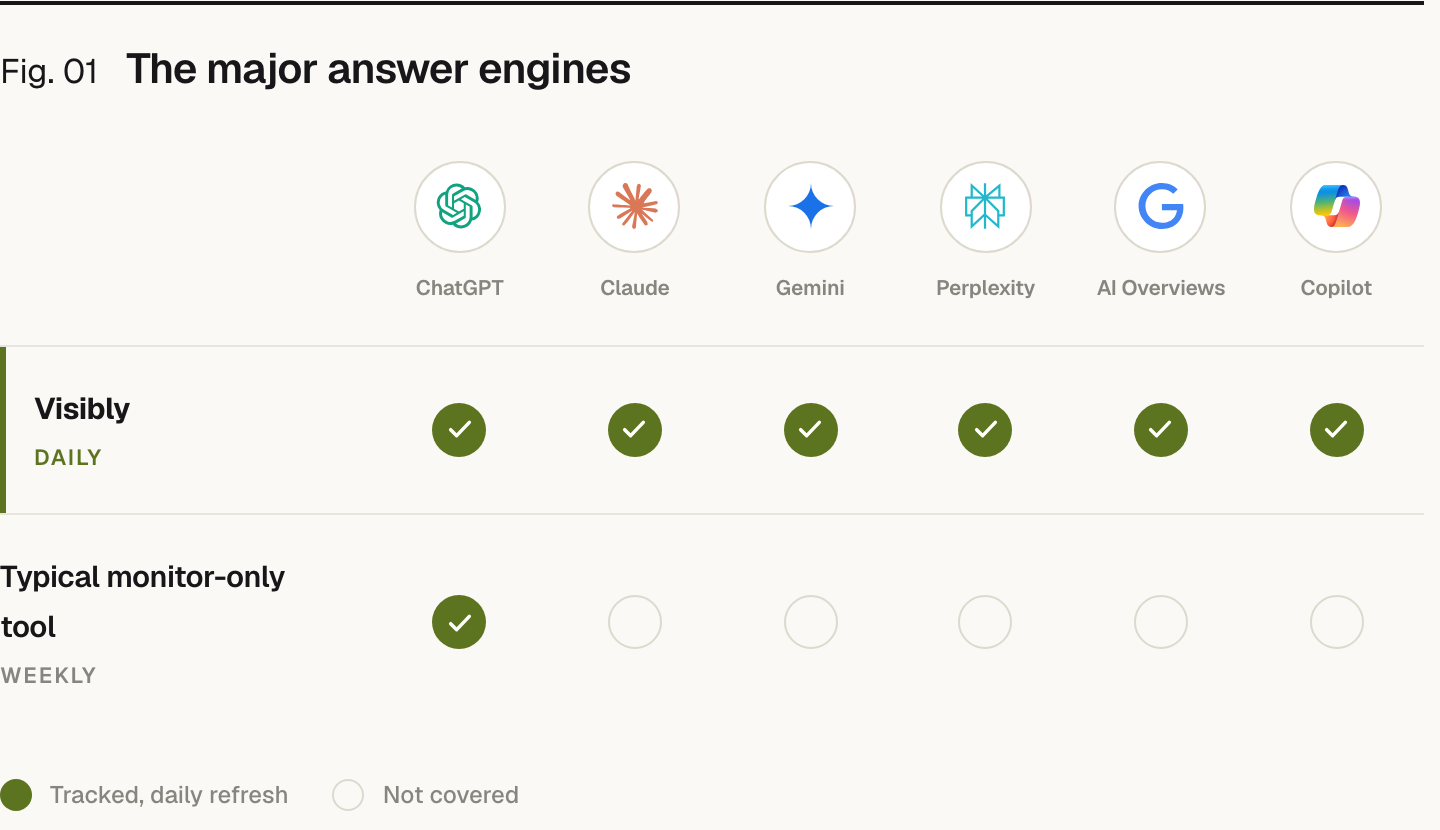
An answer engine is a search system that returns one synthesized, sourced answer to a question instead of a ranked list of links. ChatGPT, Claude, Gemini, Perplexity, Microsoft Copilot, and Google AI Overviews are all answer engines. They read across many sources and hand the user a conclusion, not a page of options. Prefer tracks five of them on every plan: ChatGPT, Gemini, Perplexity, Google AI Overviews and AI Mode.
How an answer engine differs from a search engine#
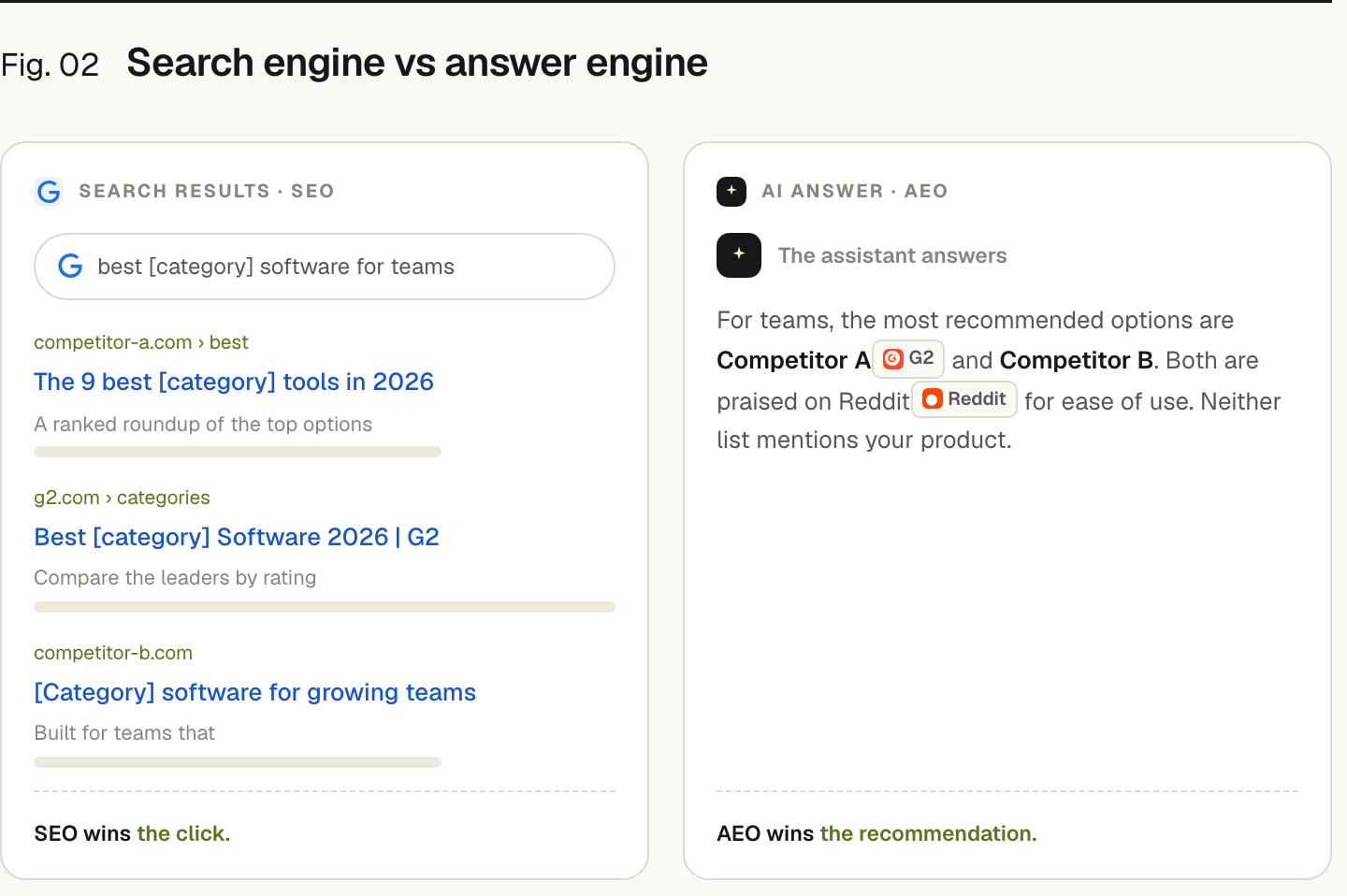
A traditional search engine ranks pages and leaves the choice to you. An answer engine makes the choice, then explains it. That shift changes what visibility means. You are no longer competing for a higher position in a list of ten links; you are competing to be one of the two or three brands the engine names inside its answer.
How answer engines build an answer#
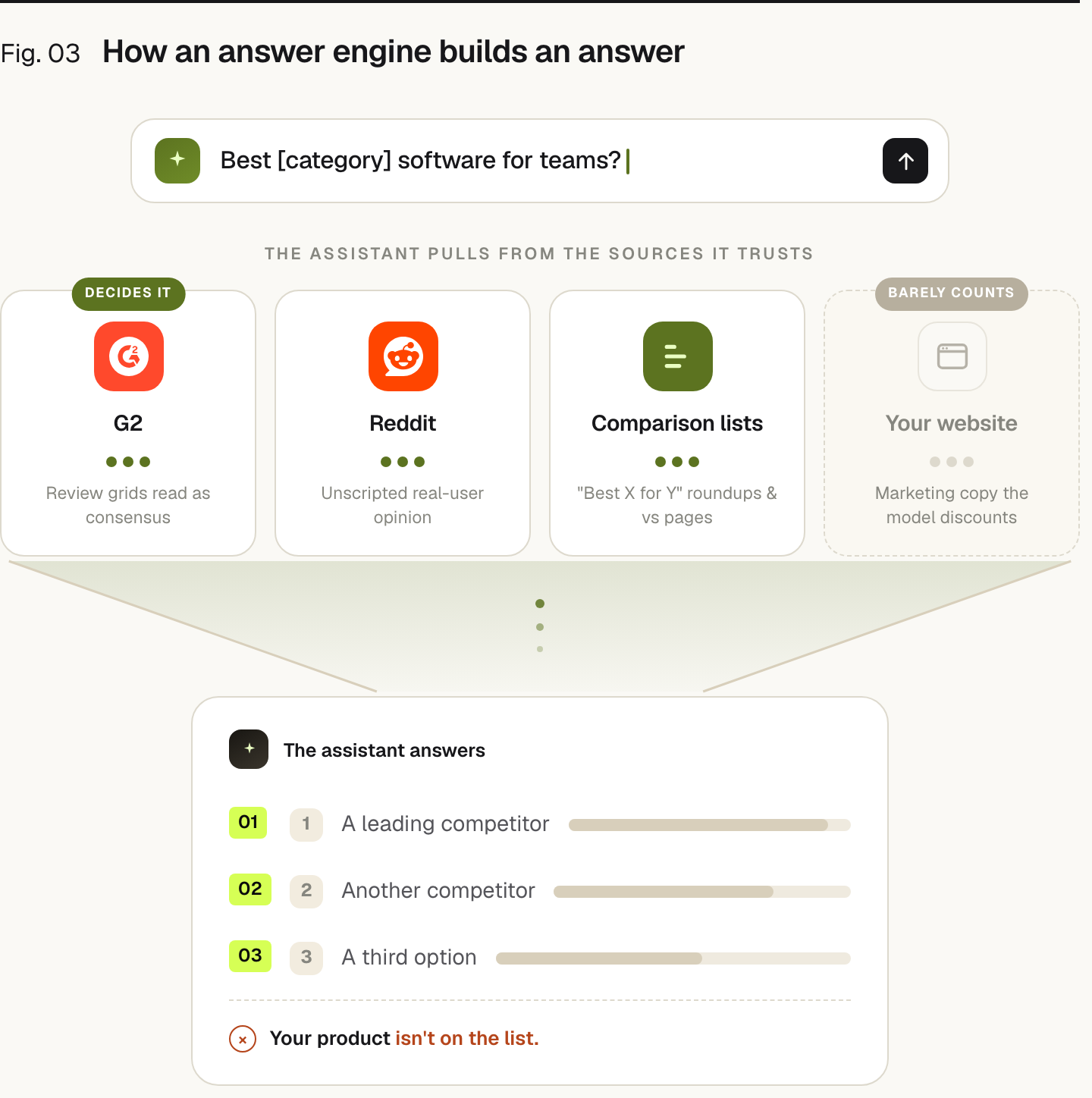
Most answer engines work in a similar way:
- Retrieve. They gather relevant sources from the open web or a trained corpus.
- Synthesize. They combine those sources into a single coherent response.
- Cite. Many surface links or named brands so the user can verify, or simply act on, the answer.
The brands that get named are the ones whose content is clear, specific, and trusted across the sources the engine reads.
Why answer engines matter for your brand#
Because the answer is now the destination, being absent from it means being invisible at the moment a buyer decides. This is why Answer Engine Optimization and Generative Engine Optimization exist: to make sure the engine names you, and to grow your share of voice across every engine your buyers use.
How Prefer helps#
Prefer tracks how ChatGPT, Gemini, Perplexity and Google’s AI Overviews and AI Mode talk about your brand, shows which sources shape the answer, and ships the work to get you cited. Not sure your pages are ready to be quoted? Our free answer readiness scorer grades a page in the browser. See how the answer engines describe you with a free AI visibility audit.
In context
The term in a sentence.
Related questions
People also ask.
- What is the difference between an answer engine and a search engine?
- What are examples of answer engines?
- How do answer engines decide what to cite?
Questions
Asked plainly.
What is the difference between an answer engine and a search engine?
A search engine returns a ranked list of links and leaves you to pick one. An answer engine reads across many sources and returns a single synthesized answer, often with citations, and Prefer tracks how five of them (ChatGPT, Gemini, Perplexity, Google AI Overviews and AI Mode) answer your buyers' questions. The search engine points you to information; the answer engine delivers the conclusion.
What are examples of answer engines?
ChatGPT, Claude, Gemini, Perplexity, Microsoft Copilot, and Google AI Overviews are all answer engines. Prefer tracks five of them on every plan (ChatGPT, Gemini, Perplexity, Google AI Overviews and AI Mode), with Claude on Enterprise. Each reads the web, or a trained corpus, and returns a direct answer rather than a page of blue links.
How do answer engines decide what to cite?
They favor sources that are clear, specific, well-structured, and trusted. Prefer shows which sources each engine cites for your buyers' questions, so you can see what it trusts in your category. Content that leads with a direct answer, uses named entities and real numbers, and is reinforced by mentions across authoritative sites and active communities is more likely to be cited.
Keep reading