Glossary
Knowledge graph entity how AI knows your brand is real.
A knowledge graph entity is a real-world thing an AI system recognizes and links facts to. Why it decides if ChatGPT knows your brand, and how Prefer checks.

Knowledge graph entity A knowledge graph entity is a real-world thing, such as a company, product or person, that an AI system recognizes and attaches verified facts to. Prefer checks whether AI engines know yours.
A knowledge graph entity is a distinct real-world thing, such as a company, product, person, or place, that an AI system recognizes as a node in its map of the world and attaches verified facts and relationships to. When ChatGPT, Gemini, or Google’s AI surfaces know your brand, it is because you exist as an entity, not just a string of text. When they do not, you are words on a page they may or may not retrieve. Prefer checks whether those engines recognize your brand and shows where your facts are inconsistent or missing.
How a knowledge graph entity works#
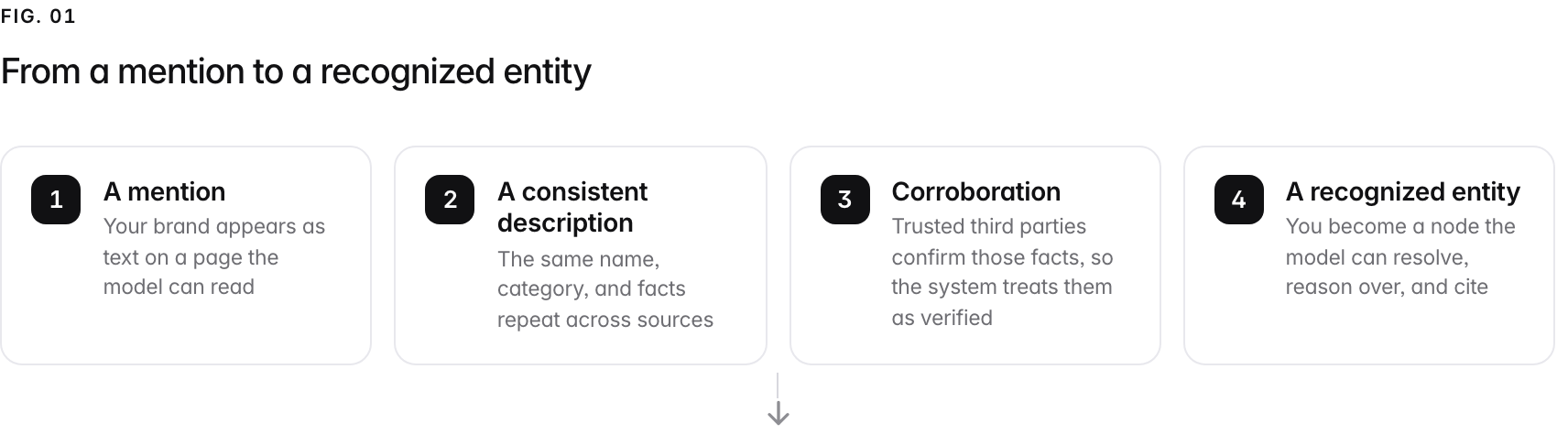
An entity is more than a name. It is a stable identifier that ties together everything the system believes about a thing: what category it belongs to, who founded it, what it competes with, where it is cited. Search engines build these graphs from many sources, including Wikipedia, Wikidata, structured data on your own site, and the consistent way third parties describe you. The model resolves the words in a prompt to entities first, then reasons over the facts attached to each one.
Three things make a brand legible as an entity:
- Consistency. Your name, category, and key facts are described the same way everywhere the model reads.
- Corroboration. Independent, trusted sources repeat those facts, so the system treats them as verified.
- Connection. You are linked to the entities you relate to (your category, your competitors, your founders).
Why knowledge graph entities matter for AI visibility#
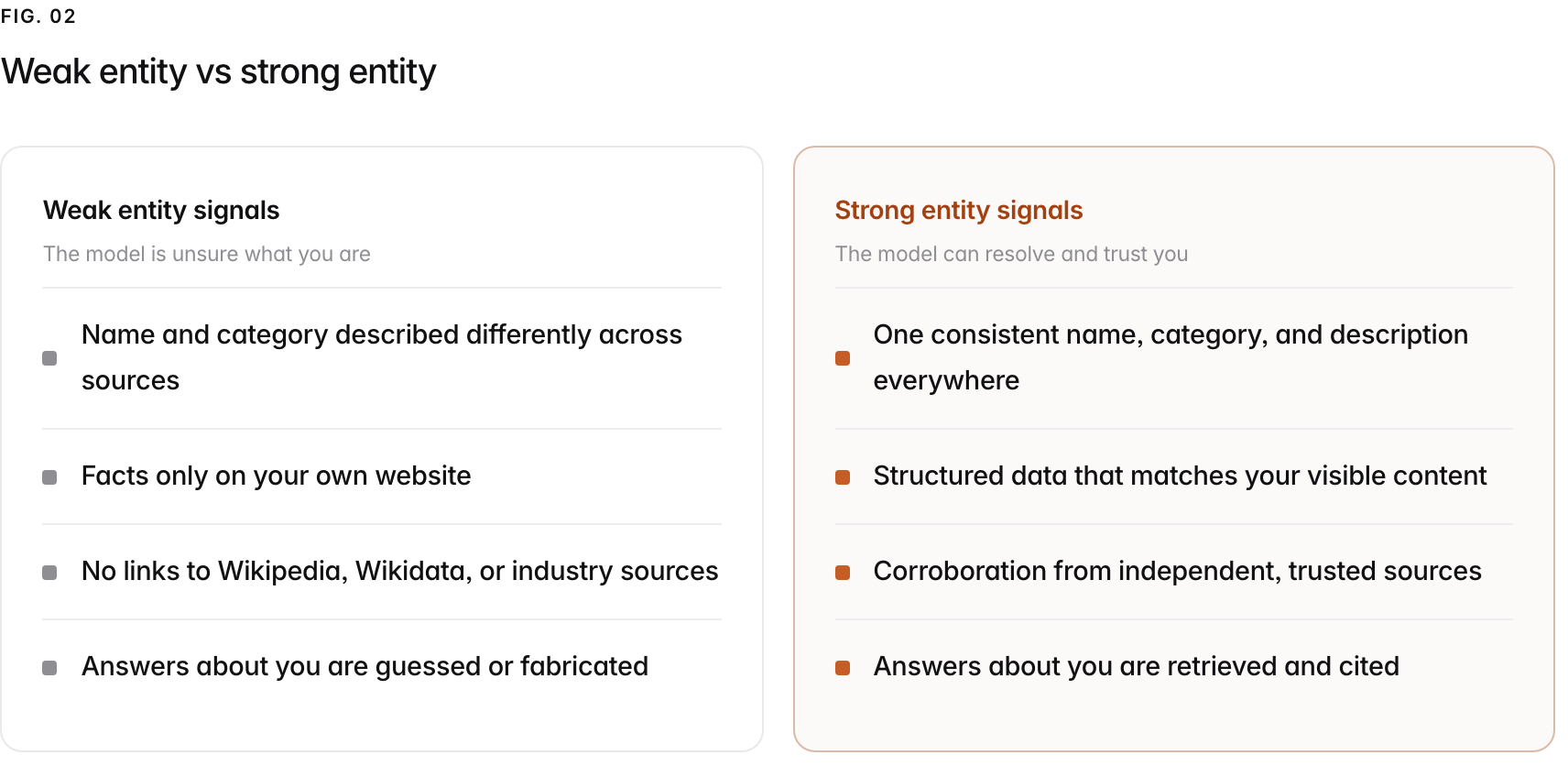
If an AI system does not recognize your brand as an entity, it cannot confidently recommend you, and it may invent details instead. In Prefer’s 2 September 2026 ChatGPT run of 50 buyer prompts, the model’s own hidden sub-queries for “best AEO tools” searched brands it already knew by name, such as Semrush, Ahrefs, and Otterly. A brand the engine does not recognize is unlikely to get that search, which keeps it out of the consideration set. Entity recognition is what puts you in that set.
The same run showed the flip side working. The prompt “What is Prefer?” was answered by fabrication on our day-zero baseline; by this run the model retrieved and cited our own domain instead of guessing. That is entity grounding turning on, and it is the difference between being invented and being quoted.
Knowledge graph entity vs keyword#
A keyword is a string you want to rank for. An entity is a thing the model understands. Classic SEO optimizes strings; AI search resolves entities. You can stuff a page with the phrase “project management software” and still not be understood as a product in that category. Being an entity means the system can answer “what is it, what does it do, who is it for, what does it compete with” without you being present in the prompt at all. This is closely tied to grounding: the model can only ground an accurate answer about you if it first recognizes you.
Example#
Ask an assistant “who makes a good AI visibility tool for mid-market brands?” The model resolves “AI visibility tool” to a category entity, pulls the products it has linked to that category, and ranks them by what its sources say. A brand that is a well-formed entity, with a consistent name, a clear category, and corroborated facts, gets considered. A brand that only appears as loose text on its own website gets skipped, even if that website is excellent.
How to become a recognized entity#
How Prefer helps#
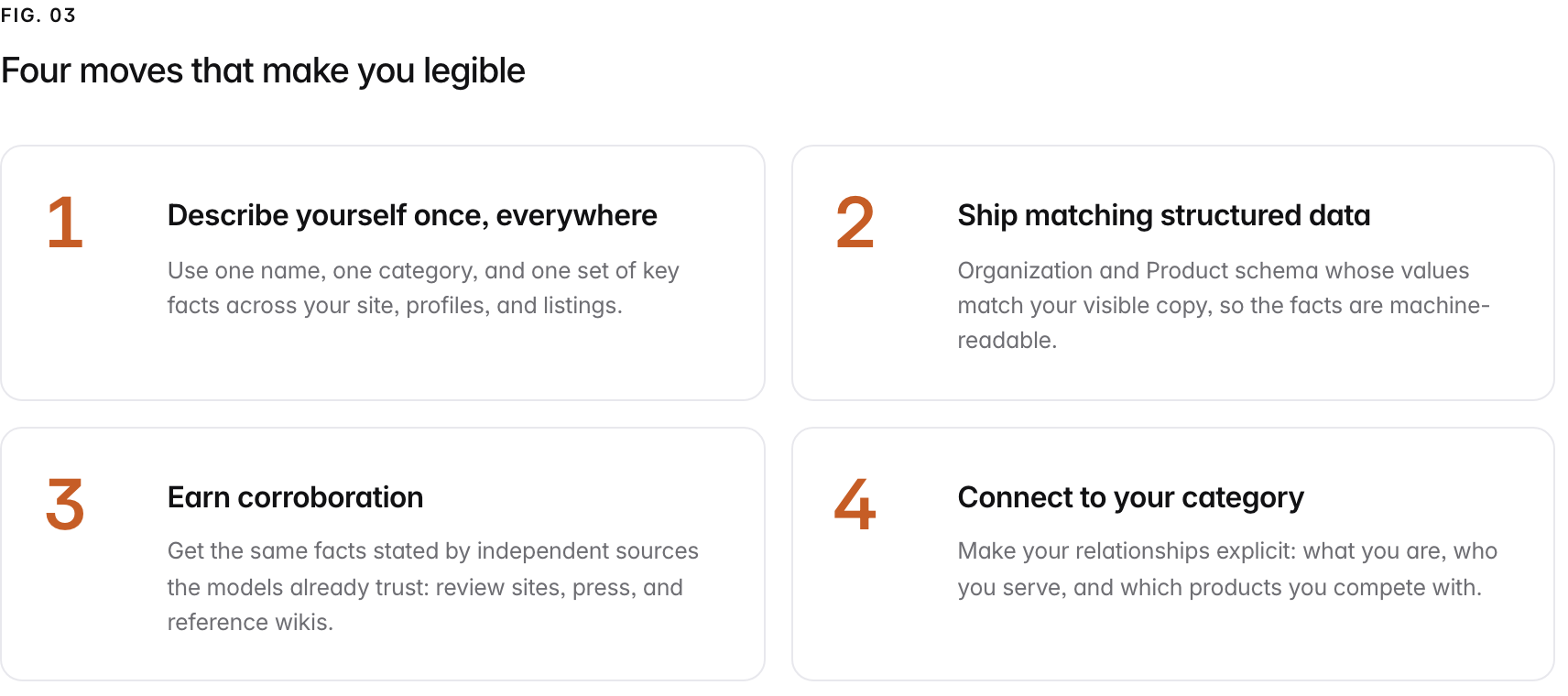
Prefer audits whether the major AI engines recognize your brand as an entity, shows where your facts are inconsistent or missing across the sources models read, and recommends the entity and schema fixes that build grounding; Prefer Managed does that work and the off-page corroboration for you. It is the same work that lifts your LLM visibility across every engine. See where you stand with a free AI visibility audit.
In context
The term in a sentence.
Related questions
People also ask.
- Why doesn't ChatGPT know my company?
- How do I become a knowledge graph entity?
- What is the difference between an entity and a keyword?
Questions
Asked plainly.
What is a knowledge graph entity in simple terms?
It is a real-world thing, a company, product, person, or place, that an AI system recognizes and stores facts about. Prefer checks whether ChatGPT, Gemini, Perplexity and Google's AI answers recognize your brand and shows where your facts are inconsistent or missing. When an assistant knows your brand, it is treating you as an entity rather than as loose text on a page.
Why doesn't ChatGPT know my company?
Usually because you are not yet a recognized entity. Prefer's free AI visibility audit shows how ChatGPT and other engines answer your buyers' questions today, and whether they name you. Your facts may be inconsistent across sources, missing from structured data, or uncorroborated by third parties the model trusts, so the system cannot resolve who you are and may skip or invent details.
How is a knowledge graph entity different from a keyword?
A keyword is a string you rank for; an entity is a thing the model understands. Prefer checks whether AI engines recognize your brand as an entity, not just whether you rank for a phrase. SEO optimizes strings, AI search resolves entities, so being understood as a product in your category matters more than repeating a phrase.
How do I become a recognized entity?
Prefer shows where your facts are inconsistent or missing across the sources AI reads and recommends the entity and schema fixes; Prefer Managed does that work for you. The work itself: describe your name, category, and key facts the same way everywhere, ship structured data that matches your visible content, and earn independent sources that repeat those facts. Consistency and corroboration turn a mention into an entity.
Keep reading