Glossary
Zero-Click Search when the answer ends the search.
Zero-click search ends on the results page or in an AI answer, with no click to a site. What it means for AI visibility, and how Prefer measures it.

Zero-Click Search is a search that ends without a click to any website, because the answer appears on the results page or in an AI assistant's reply. Prefer tracks whether that answer names you.
Zero-click search is a search that ends without the user clicking through to any website, because the answer appears directly on the results page or inside an AI assistant’s response. The user gets what they came for from a featured snippet, a knowledge panel, a Google AI Overview, or a chat answer, and never visits a source. It is the backdrop that makes AI visibility matter: if the click is optional, the brand named in the answer still wins the decision. Prefer measures what that hides from your analytics: whether AI answers name and cite you.
How zero-click search works#
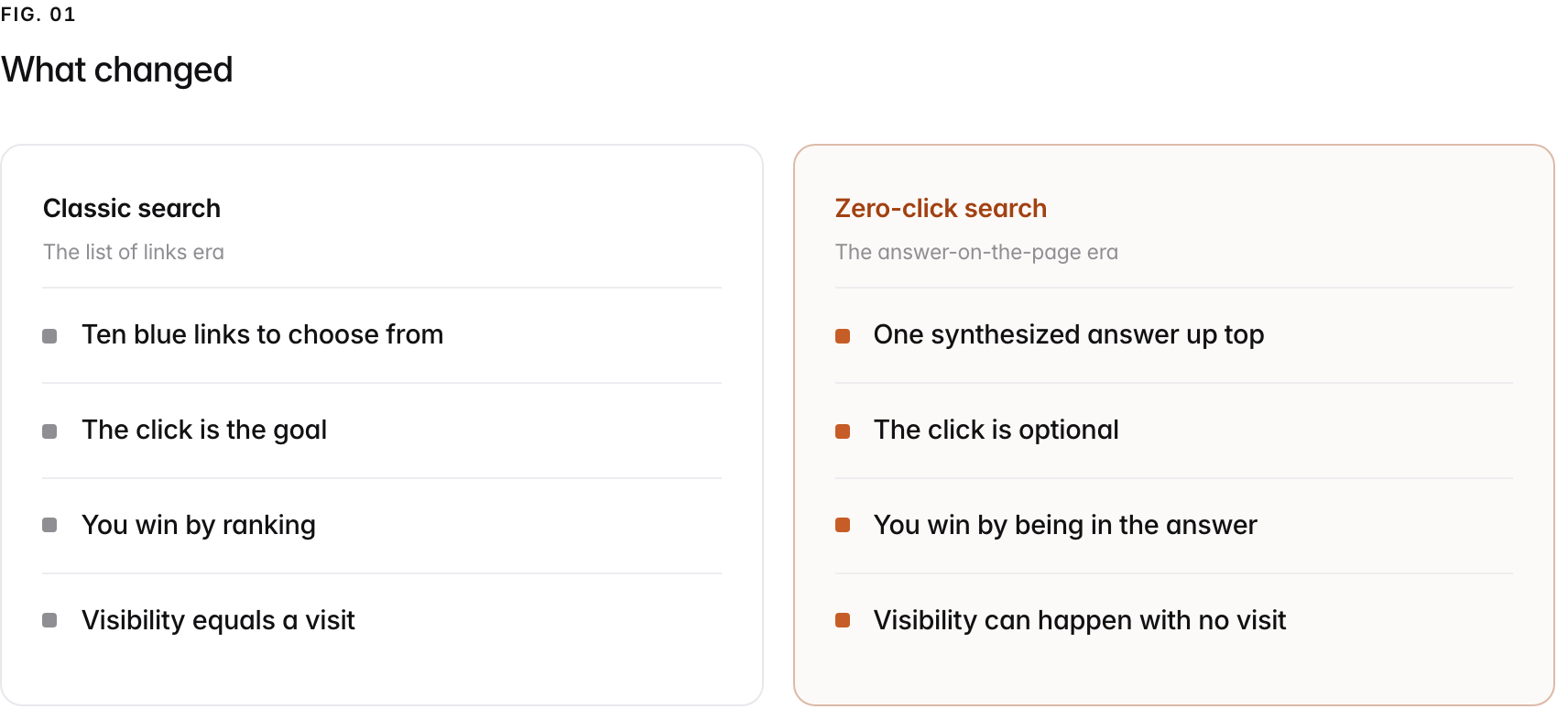
The pattern is the same across surfaces. The search engine or assistant reads the web on your behalf and shows you a finished answer, so the trip to a website becomes unnecessary:
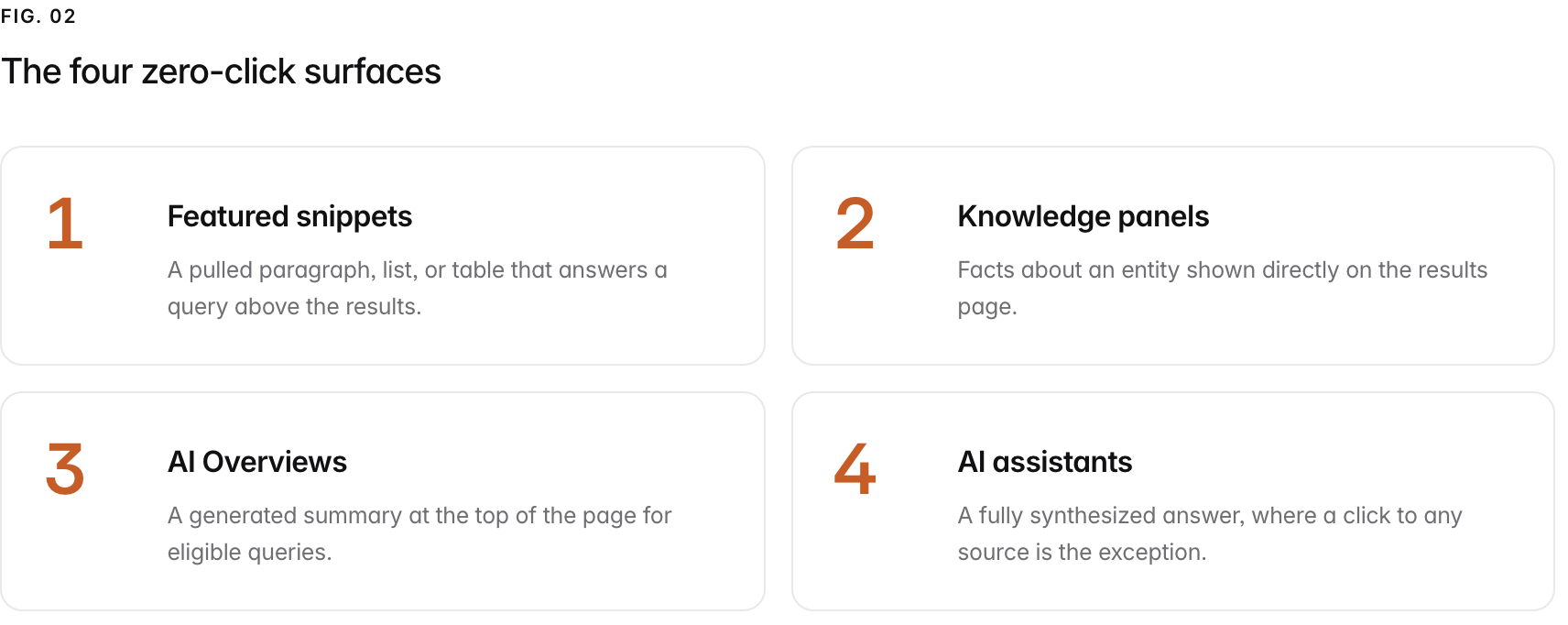
- On classic search, a featured snippet or knowledge panel answers simple, factual queries above the links.
- In Google AI Overviews, a generated summary sits at the top of the page for eligible queries.
- In an AI assistant, the entire response is synthesized from sources you never open.
By SparkToro’s widely cited zero-click research, the majority of Google searches in the United States already end without a click to the open web. AI assistants push that further, because their default output is an answer, not a list of links.
Where zero-click answers happen#
Why zero-click search matters for AI visibility#
In a zero-click answer, being present is worth more than ranking somewhere on a page nobody scrolls. The assistant names a short list, often two or three brands, and the buyer rarely looks further. That makes AI answers a winner-take-most surface: a rising share of voice inside answers shapes the decision even when no visit follows. Even when an answer does cite its sources, most of them point to pages the brand does not control: in our July 2026 citation study, vendors’ own sites were only 34 percent of the 1,237 citations logged across four engines. And the purest form of zero-click is an answer with no source at all: in that same study, ChatGPT answered 29 of 47 buyer questions straight from memory, offering nothing to click.
![The same question, 'what is the best [category] tool?', answered twice. Before the AEO work: the assistant recommends Competitor A (cited from G2) and Competitor B (praised on Reddit), and your brand is not mentioned. After the work: the assistant names Competitor A, Competitor B and your brand, now cited from a comparison guide.](/figures/gl-zero-click-absent.png)
Zero-click search versus AI referral traffic#
These two describe the same shift from opposite ends. Zero-click search is the searches that never produce a visit; AI referral traffic is the minority that do, when a user clicks a cited link. Because most AI answers are zero-click, the visits that come through are smaller in volume but higher in intent, since the visitor arrives already recommended. Optimizing for one without the other is a half-measure: you want to be in the answer, and you want to catch the clicks it does send.
How to stay visible when the click disappears#
How Prefer helps in a zero-click world#
Prefer measures the thing a zero-click surface hides from your analytics: whether AI answers actually name and cite you, across ChatGPT, Gemini, Perplexity and Google’s AI Overviews and AI Mode, and which sources decide each answer. When the click is optional, that is the only honest scoreboard left. Run a free AI visibility audit to see how often you make the answer.
In context
The term in a sentence.
Related questions
People also ask.
- What percentage of searches are zero-click?
- How is AI search related to zero-click search?
- How do you get visibility in a zero-click world?
Questions
Asked plainly.
What is zero-click search in simple terms?
It is any search where you get your answer without clicking a result. Prefer measures the part your analytics cannot see: whether the AI answers that end those searches name and cite you. The answer sits in a featured snippet, a knowledge panel, a Google AI Overview, or an AI assistant's reply, so the search ends on the spot instead of sending you to a website.
How is AI search related to zero-click search?
AI assistants are the newest and purest zero-click surface. In Prefer's July 2026 study, ChatGPT answered 29 of 47 buyer questions entirely from memory, citing nothing to click. They read the sources for you and hand back one synthesized answer, so most conversations end with no click at all.
How do you stay visible when searches are zero-click?
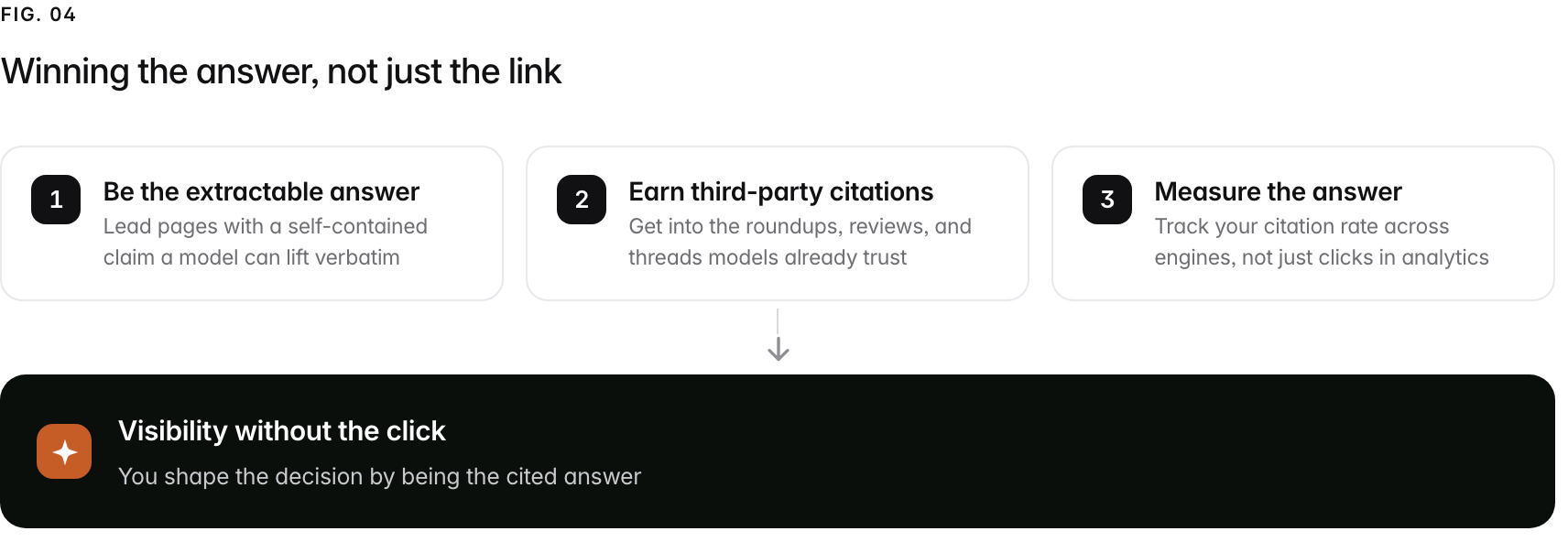
Optimize to be inside the answer, and measure it there; Prefer tracks whether ChatGPT, Gemini, Perplexity and Google's AI Overviews and AI Mode name and cite you. That means writing extractable, answer-first content a model can lift, earning citations on the third-party sources models trust, and measuring your citation rate rather than only clicks.
Does zero-click search mean SEO is dead?
No, but the scoreboard changes, and Prefer measures the new one: whether AI answers name and cite you. Ranking still makes you eligible to be summarized, and clicks still happen for deeper research. What changes is that visibility no longer equals a click: you can shape a buyer's decision by being the cited answer even when no visit follows.
Keep reading